Hull & Machinery (H&M) Damage Surveys: Expert Assessment After Marine Incidents and Casualties
When Maritime Incidents Occur: Understanding the Critical Role of H&M Damage Surveys
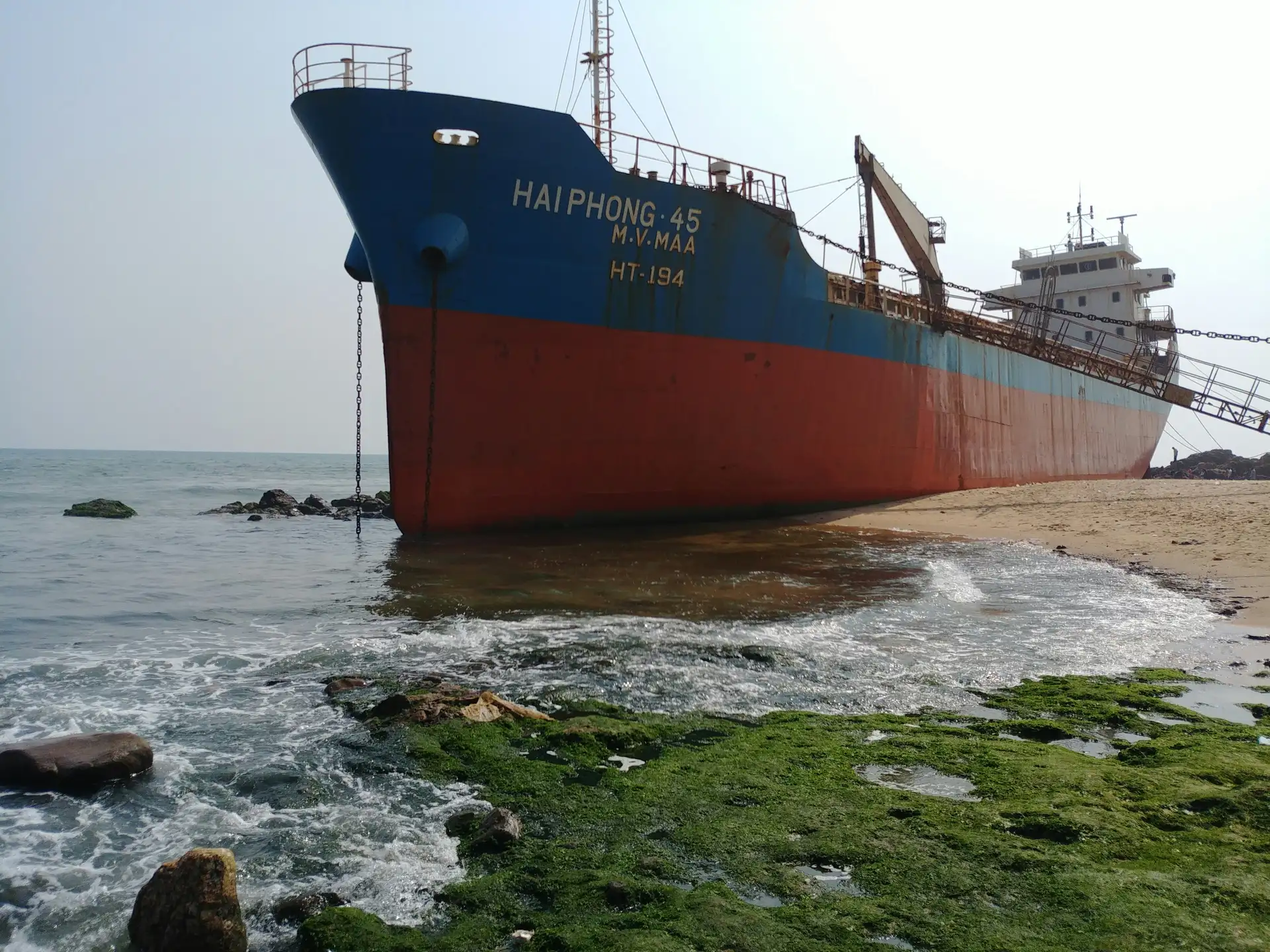
Marine incidents—whether sudden and catastrophic or developing gradually—represent among the most disruptive events that can occur during a vessel’s operational life. A collision with another vessel, a grounding on rocky shoals, contact with a fixed structure, a machinery failure causing fire, or dozens of other potential incidents can result in substantial damage to a vessel’s hull structure and operational machinery. When such incidents occur, multiple parties—vessel owners, maritime insurers, P&I clubs, salvage organizations, repair contractors, and regulatory authorities—require rapid, accurate, and independent assessment of the damage sustained, the circumstances surrounding the incident, and the required remedial actions.
This critical need for expert damage assessment following maritime incidents is precisely where professional H&M Damage Surveys emerge as essential. An H&M Damage Survey is a specialized form of marine surveying conducted specifically in response to incidents resulting in damage to a vessel’s structural hull or its operational machinery systems. Unlike routine surveying, which occurs during normal vessel operation, damage surveying is reactive, emergency-response oriented, and often conducted under challenging circumstances in the immediate aftermath of incidents.
The H&M Damage Survey industry has evolved into a sophisticated specialty within marine surveying, encompassing specialized expertise in incident investigation, structural engineering assessment, machinery diagnostics, causation determination, and damage quantification. Professional H&M surveyors combine deep marine engineering knowledge with investigative skills and comprehensive understanding of insurance principles, maritime law, and repair procedures.
Defining the Scope: What H&M Damage Surveys Investigate and Accomplish
An H&M Damage Survey following a marine incident pursues multiple distinct but interrelated objectives, each critical for different stakeholders involved in the incident’s aftermath.
The primary objective involves comprehensive identification and documentation of damage. This seemingly straightforward task becomes complex in reality. A collision incident, for example, might result in visible hull damage—crushed plating, twisted structural members, gaping holes—but might also cause hidden damage to internal structures, cargo holds, or machinery compartments. The surveyor’s responsibility extends beyond documenting immediately visible damage to systematically investigate for damage extending beyond the immediate impact point. Advanced inspection techniques, including use of Non-Destructive Testing methods such as ultrasonic thickness gauging, might reveal damage not apparent to visual inspection.
Causation determination represents the second critical survey objective. What actually caused the damage? Was it a direct collision between vessels, or was it a collision with floating debris or a submerged object? Did machinery damage result from a catastrophic mechanical failure, operator error, or maintenance deferred to the point where system failure became inevitable? Did fire result from an electrical system fault, fuel system leak, or other source? Careful investigation of damage patterns, examination of machinery components, review of vessel operational logs and crew statements, and consultation with technical experts can typically trace damage to its probable cause. Causation determination matters greatly because insurance policies often provide coverage for some types of incidents while excluding others; establishing probable cause directly impacts insurance claim outcomes.
Assessment of repair requirements represents a third critical objective. What repairs are necessary to restore the vessel to its pre-incident condition? Which repairs represent emergency/urgent measures necessary before the vessel can safely continue operation? Which repairs are medium-term requirements to be completed within days or weeks? Which represent longer-term capital repairs to be scheduled during planned shipyard visits? Professional surveyors prioritize required repairs and establish repair timelines based on safety requirements, operational urgency, and practical repair logistics.
Estimation of repair costs is the fourth key objective. What will the identified repairs actually cost to execute? This requires understanding repair complexity, estimating labor requirements, identifying material and component costs, and accounting for contingencies and overhead. Accurate repair cost estimation is essential for insurers evaluating claim amounts and for vessel operators assessing financial implications of the incident.
The H&M Damage Survey Process: From Initial Attendance Through Comprehensive Reporting
When an H&M Damage Survey is commissioned in response to a marine incident, the surveying process typically unfolds across multiple phases, each contributing essential information to the overall assessment.
Immediate Response and Initial Attendance: In situations where damage is substantial or involves potential environmental hazards, surveying organizations may deploy surveyors to the incident location within hours or days of the incident occurrence. Initial attendance serves multiple purposes including witnessing incident scene conditions while they remain relatively unchanged, gathering preliminary information from crew and other eyewitnesses, conducting rapid preliminary damage assessment, photographing the incident scene, and assessing any immediate environmental or safety hazards.
Information Gathering and Documentation Review: Professional H&M surveying requires comprehensive investigation of incident circumstances and preceding events. Surveyors obtain incident reports filed by vessel masters and crew members, which typically include incident timeline, weather conditions at time of incident, vessel operational status, actions taken by crew, and immediate incident consequences. Vessel operational logs, including bridge logs and engine room logs, provide chronological records of vessel operations preceding the incident. Crew statements offer eyewitness accounts of how the incident developed and how the vessel responded. Maintenance records and repair logs can reveal deferred maintenance or previous casualty damage that might have compromised vessel integrity. Classification Society records and previous survey reports document the vessel’s structural and mechanical condition prior to the incident.
Detailed Physical Inspection: The centerpiece of H&M Damage Survey work involves thorough physical inspection of damaged areas. Surveyors examine collision damage, documenting location, extent, and nature of structural damage. They inspect machinery compartments following machinery failures or fires, examining components for thermal damage, mechanical failure patterns, or other evidence explaining the failure cause. They inspect cargo holds and tank spaces to determine whether cargo-related incidents created structural damage or safety hazards. The inspection process includes detailed measurement of damaged areas, assessment of damage penetration depth, evaluation of whether damage extends beyond the immediately visible area, and comparison of actual damage to expected damage patterns for various incident types.
Non-Destructive Testing and Advanced Assessment: For complex damage scenarios or situations where damage extent exceeds visible observation capabilities, H&M surveyors employ Non-Destructive Testing methods, most commonly ultrasonic thickness measurement (UTM), to measure actual steel thickness in damaged areas and compare measurements against design specifications. This technique reveals areas of material loss exceeding visible damage. Radiographic testing, acoustic testing, and other advanced diagnostic methods might be employed in particular damage scenarios.
Machinery and Systems Assessment: When machinery damage occurs, H&M surveyors work with machinery experts to conduct detailed machinery assessments. Engines are examined for evidence of catastrophic mechanical failure versus operational abuse. Fuel systems are inspected for contamination or maintenance failures. Electrical systems are evaluated for fault conditions or maintenance deficiencies. Boiler systems, hydraulic systems, and other auxiliary machinery are similarly examined and assessed.
Photography and Visual Documentation: Modern H&M Damage Surveying relies heavily on detailed photographic documentation of damage. Photographs provide objective records of damage extent, serve as references for repair contractors developing repair plans and cost estimates, support insurers’ claims assessment processes, and can prove valuable in disputes regarding damage extent or damage causation.
Consultation and Expert Input: For particularly complex damage scenarios, H&M surveyors consult with naval architects, structural engineers, machinery specialists, metallurgists, or other experts whose specialized knowledge contributes to comprehensive damage assessment. These consultations might occur through formal peer review processes or through collaborative investigation approaches.
Damage Quantification and Cost Estimation: Experienced H&M surveyors develop detailed, documented cost estimates for required repairs. These estimates typically itemize each significant repair requirement, estimate labor hours and labor costs, identify required materials and component costs, account for overhead and contingency provisions, and provide timeline estimates for repair completion. Professional repair cost estimates are sufficiently detailed that they can serve directly as the basis for shipyard quotes or formal repair contracts.
Report Development and Presentation: Upon completion of investigation and assessment work, H&M surveyors compile comprehensive survey reports documenting findings, conclusions, and recommendations. Reports are typically organized to include executive summary, incident description, damage description by area or system, photographs and measurements, casualty analysis and probable cause assessment, repair requirements and estimates, and professional conclusions and recommendations.
Causation Determination: The Investigative Heart of H&M Surveying
Professional determination of probable cause—why the incident occurred—often represents the most valuable contribution that H&M surveyors provide. While identification and documentation of damage serves important functions, causation determination frequently drives claim decisions, regulatory responses, and corrective actions intended to prevent recurrence of similar incidents.
In collision incidents, surveyors investigate whether the collision resulted from navigation errors, equipment failure (radar or GPS malfunction), communication failures, restricted visibility conditions, vessel traffic separation scheme violations, or other human or technical factors. Damage patterns—the location and orientation of structural damage—frequently provide crucial clues regarding collision angle and impact force, which can be correlated with crew statements and eyewitness accounts to determine probable cause.
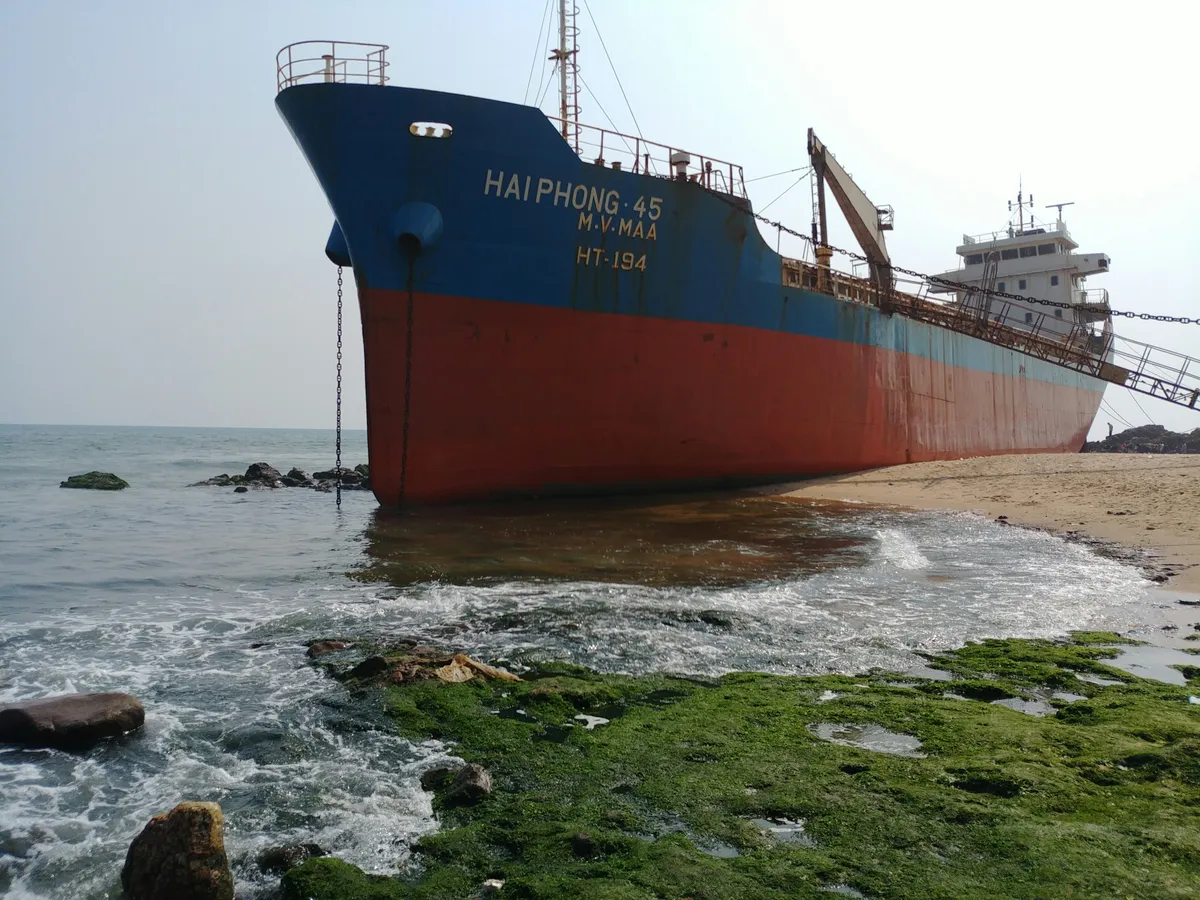
In grounding incidents, surveyors investigate whether groundings resulted from navigation errors, chart inaccuracy, GPS receiver failure, crew fatigue, communication failures, or other causative factors. Damage examination helps confirm whether grounding resulted from a sudden, high-impact collision with rocks or a gradual stranding on soft bottom. The vessel’s position at the time of grounding, if determinable from GPS records or navigational data, provides additional causation clues.
In machinery failure incidents, surveyors collaborate with machinery specialists to examine failed components for evidence of sudden catastrophic failure versus progressive deterioration, mechanical abuse, or maintenance failure. Failure analysis of machinery components can often determine whether failure resulted from a design or manufacturing defect, a maintenance omission, operator abuse, or inevitable wear despite proper maintenance.
In fire incidents, surveyors work with fire investigation specialists to trace the fire’s origin, identify the probable fire cause (electrical fault, fuel system leak, chemical reaction, etc.), and determine what factors allowed the fire to spread or prevented its suppression. Fire damage patterns themselves provide valuable clues regarding fire origin and development sequence.
The Critical Importance of H&M Surveys for Insurance Claims and Underwriter Assessment
Marine insurance—both Hull & Machinery insurance and broader general average insurance—depends fundamentally on accurate, independent assessment of damage resulting from insured perils. Insurers cannot assess claims appropriately without understanding what damage actually occurred, what the damage will cost to repair, and what causative factors might affect coverage determination.
When a vessel owner files a marine insurance claim following a casualty incident, the insurance policy typically requires that the loss be verified by an independent surveyor. The H&M Damage Survey report provides this independent verification, offering underwriters assurance that the claimed damage is genuine and that repair cost estimates are realistic and professional. Without professional H&M surveying, insurers would face information asymmetry where only the claimant possessed detailed knowledge of damage extent and repair requirements.
Furthermore, marine insurance policies often contain coverage limitations based on causation or incident type. A collision damage claim might be fully covered under the policy’s provisions, while damage resulting from inadequate maintenance might face coverage limitations or exclusions. Professional determination of probable cause, based on detailed damage investigation, directly informs coverage decisions and claim settlement amounts.
Practical Realities: H&M Surveying Under Challenging Circumstances
In theoretical terms, comprehensive H&M damage surveying follows the systematic process outlined above. In operational reality, H&M surveyors often work under challenging circumstances that require flexibility, creativity, and practical problem-solving alongside technical expertise.
Vessels suffering significant damage may be located in remote areas, difficult-to-access locations, or regions where surveyors face logistical or security challenges. Despite these challenges, surveyors must reach the incident site, conduct thorough damage investigation, and document findings.
Vessels with extensive damage may pose safety hazards to surveyors attempting to inspect damaged areas. Surveyors must assess whether proposed inspection activities are reasonably safe to conduct or whether they must wait for temporary repairs or vessel stabilization before proceeding.
In casualty situations involving multiple parties’ interests—vessel owners, insurers, P&I clubs, salvage companies, port authorities—surveyors must maintain independence and objectivity while navigating these complex stakeholder relationships. Surveyors serve as neutral technical experts whose role is to provide factual assessment rather than to advocate for any particular stakeholder’s interests.
Time pressure represents another practical reality in H&M surveying. Vessel owners facing significant damage often face substantial daily costs associated with disrupted operations, demurrage if vessels are under charter, or cargo damage mitigation. Pressure exists to complete survey work rapidly and authorize repairs to commence. Experienced H&M surveyors balance desires for thorough investigation against practical time constraints and operational realities.
Zakian Surveyors: Expert H&M Damage Assessment Worldwide
Zakian Surveyors & Appraisal Services maintains specialized H&M Damage Survey expertise across its global surveying network. Our experienced marine engineers and certified surveyors respond to marine casualty incidents worldwide, conducting rapid damage assessment, determining probable cause of incidents, developing comprehensive repair specifications and cost estimates, and providing detailed survey reports supporting insurance claims and damage remediation. Our independence, technical expertise, and commitment to thorough assessment make us a preferred partner for vessel owners, maritime insurers, P&I clubs, and other maritime stakeholders navigating the aftermath of marine casualties.
Conclusion: H&M Surveys as Critical Post-Incident Assessment
When marine incidents result in damage to vessel hulls or machinery, professional H&M Damage Surveys provide the objective, expert assessment upon which effective response depends. By identifying damage, determining causation, assessing repair requirements, and estimating repair costs, comprehensive H&M surveying enables vessel owners to understand incident implications, enables insurers to assess and settle claims appropriately, and enables repair professionals to develop comprehensive plans for vessel remediation. In the complex aftermath of marine casualties, professional H&M damage surveying provides clarity and factual foundation that transforms confusion into informed decision-making.